ADHD and sensory overload: when noise, light or a crowd become too much
You walk into a café, or an open-plan office. Voices overlap, a light flickers, a blender crushes ice. Within a few minutes, you can no longer follow the conversation. You feel hot, you want to leave, sometimes without being able to say why. If this sounds familiar, you are not “too fragile”: in many adults with ADHD, sensory overload arrives faster, and harder.
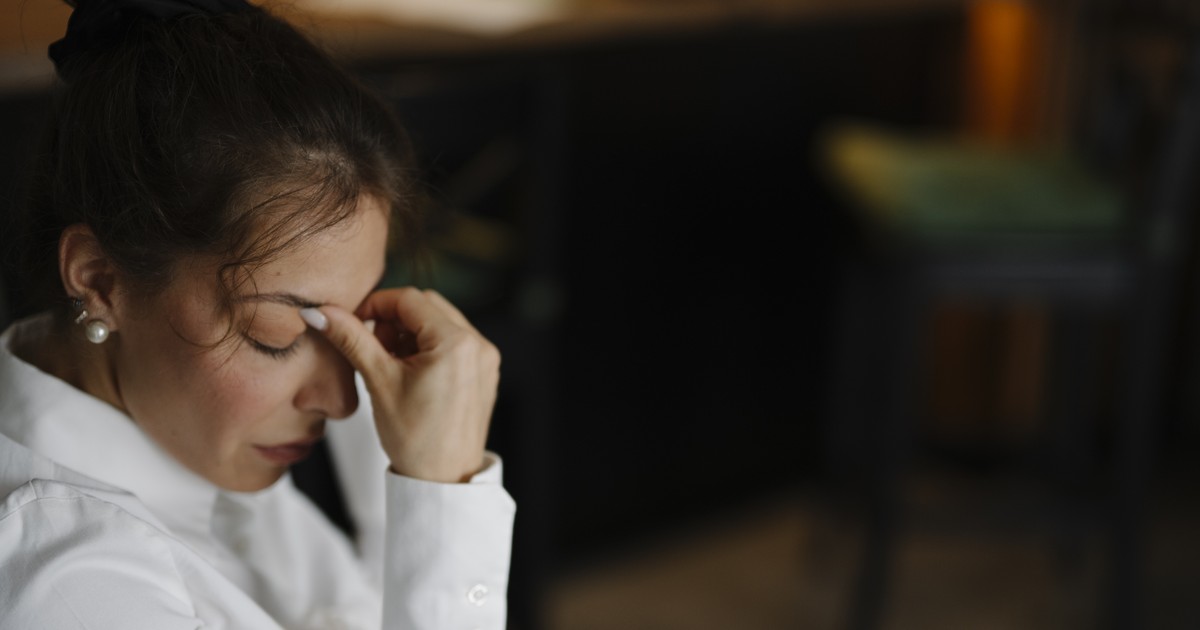
In many adults with ADHD, sounds, lights or some kinds of touch come through more strongly. In a study of 116 already diagnosed adults, both hyper- and hyposensitivity were more common than in the questionnaire norms, especially for hearing. This is not an official diagnostic criterion. The experience itself is still very real.
This is not the same as anxiety, or social fatigue
We have already written about emotions that rise too fast, sudden anger, anxiety that settles in at night, and social fatigue after an evening out. Here we focus on the senses. Sensory overload is the moment when noise, light, smells or the feel of clothing become too much, sometimes before a clear emotion has even formed.
Anxiety often revolves around a fear or a list. Social fatigue comes mainly from being with other people, and from the crash that follows. The three can follow one another. A room that is too loud can tense the body, then set off worry, then make you want to withdraw. Telling them apart helps you pick a useful move: turning the sound down is not the same reflex as steadying a thought that keeps looping.
What the studies actually measure
Sensory overload is not a criterion for ADHD in the most widely used diagnostic manuals. Studies usually measure it with sensory-profile questionnaires: too much reaction (hypersensitivity), or too little (hyposensitivity), across several modalities, such as hearing, sight, touch and movement.
In 2017, Denise Bijlenga and colleagues gave these questionnaires to 116 adults with a diagnosis of ADHD, in a specialist centre in the Netherlands. Compared with the questionnaire norms, these people showed more hyper- and hyposensitivity. The difference was clearest for activity level and for hearing. In this sample, sensory scores went together with the intensity of ADHD symptoms. They were not explained by autistic-trait scores, or by other reported co-occurring conditions. The authors also report a sex difference in this group: 43% of the women reported hyper- or hyposensitivity, against 22% of the men. This is not an official prevalence for all people with ADHD. It is the finding of this study, in a clinical sample, with self-report questionnaires, compared with norms, not with a control group recruited at the same time.
The following year, Maria Panagiotidi, Paul Overton and Tom Stafford asked the question in the general population: 234 people, not selected on a diagnosis. The higher the ADHD traits, the more sensory difficulties people also reported, across several modalities. This study is not about already diagnosed adults. It suggests a link, in an online sample, between ADHD traits and sensory difficulties.
In other words: there is solid evidence that, in many adults with ADHD, the filtering of sensations works differently. There is not, however, a single percentage that would hold for everyone. And the studies do not say that every person with ADHD is overloaded in the same way. For some, it is noise. Others notice some sensations less (hyposensitivity). Both show up in the Dutch study.
Why it tips so fast
The sound of a coffee machine, a scratchy label at the back of your neck, an open-plan office, a supermarket on a Saturday: the system reaches saturation sooner. Your mind has not yet had time to put a name to it. Afterwards, you often tell yourself that you “handled it badly”, or that you are hard to be around. Then shame piles on top of the overload.
That overload can also leave a mark. A night that was too loud is sometimes paid for the next day, like a crash. This is not a lack of effort. It is a system that has already given a lot to cope with a busy environment.
What can help, in practice
None of this replaces support if you need it. Here is what many people find useful, in the minutes that follow, and on the days when it comes back.
Take off one layer of noise. A step outside, earplugs, headphones, a quieter corner. You do not have to justify yourself at length. One sentence is enough: “I need two quiet minutes.”
Turn down one thing, not everything. The light, the volume, or the number of conversations at once. A single change often already gives you some air. Waiting for it to “pass on its own” usually costs more energy.
Name the fact, not the judgement. The fact: “the place is too loud, my body is saturated.” The judgement: “I am too sensitive, I am spoiling the evening.” The first sentence describes a state. The second one only adds weight.
Keep a note of the context. Note the moment, the place, the kind of sensation (noise, light, crowd, clothing), and what helped. After a few weeks, a pattern often appears. Your memory will not show it to you on its own, even that same evening. In Tdhappi, you can log the emotion just afterwards, in one tap, then look back at what returns.
What this does not replace
If you withdraw more and more, if you avoid work or going out, or if the overload comes with dark thoughts, a professional can help. This article is not a diagnosis. The studies cited rely mainly on questionnaires, and one of the two is about the general population, not a confirmed diagnosis.
Want to see at which moments sensory overload hits too fast? Log the emotion in one tap in Tdhappi, just afterwards, when you can.
Frequently asked questions
Is sensory overload an official ADHD symptom?
No. The criteria most often used to make the diagnosis do not list sensory overload. Studies, including Bijlenga and colleagues in 2017, do find more hyper- and hyposensitivity in already diagnosed adults, compared with the questionnaire norms. The experience can be very real, without being a criterion on its own.
Is it the same thing as anxiety?
Not necessarily. Sensory overload starts with the senses: too much noise, light or touch. Anxiety revolves more around a fear, or a list that will not stop. The two can follow each other. Telling them apart helps you pick the right move, at the right moment.
If noise bothers me quickly, do I also have autism?
Not automatically. In the 2017 study, the sensory scores of the 116 adults with ADHD were not explained by autistic-trait scores. That study does not make a diagnosis, and it does not rule one out either. If the question arises for you, it is something to discuss with a professional, not to settle from an article.
What can I do, in practice, when it gets too much?
Turn down one layer of stimulation (noise, light, or the crowd), step out for a few minutes if you can, and name the fact rather than the judgement. Then note the context, to see what comes back. If it isolates you, or if it goes too far, human support remains the right next step.
Sources
- Bijlenga D., Tjon-Ka-Jie J. Y. M., Schuijers F., Kooij J. J. S., “Atypical sensory profiles as core features of adult ADHD, irrespective of autistic symptoms”, European Psychiatry, 2017: PubMed 28371743, doi 10.1016/j.eurpsy.2017.02.481 (abstract)
- Panagiotidi M., Overton P. G., Stafford T., “The relationship between ADHD traits and sensory sensitivity in the general population”, Comprehensive Psychiatry, 2018: PubMed 29121555, doi 10.1016/j.comppsych.2017.10.008 (abstract)
Photo: Shixart1985, via Wikimedia Commons (CC BY 2.0), cropped
